
Golden, CO · Garage Door Service
Garage Doors on Golden's Older Housing Stock
Golden homes built 1938-1997 often have garage doors with no vapor barrier or insulation rating. Here's what that means for repair, replacement, and cost decisions.
- Repairs & new doors
- Springs & openers
- Serving 8 nearby communities
Doing Nothing For Now
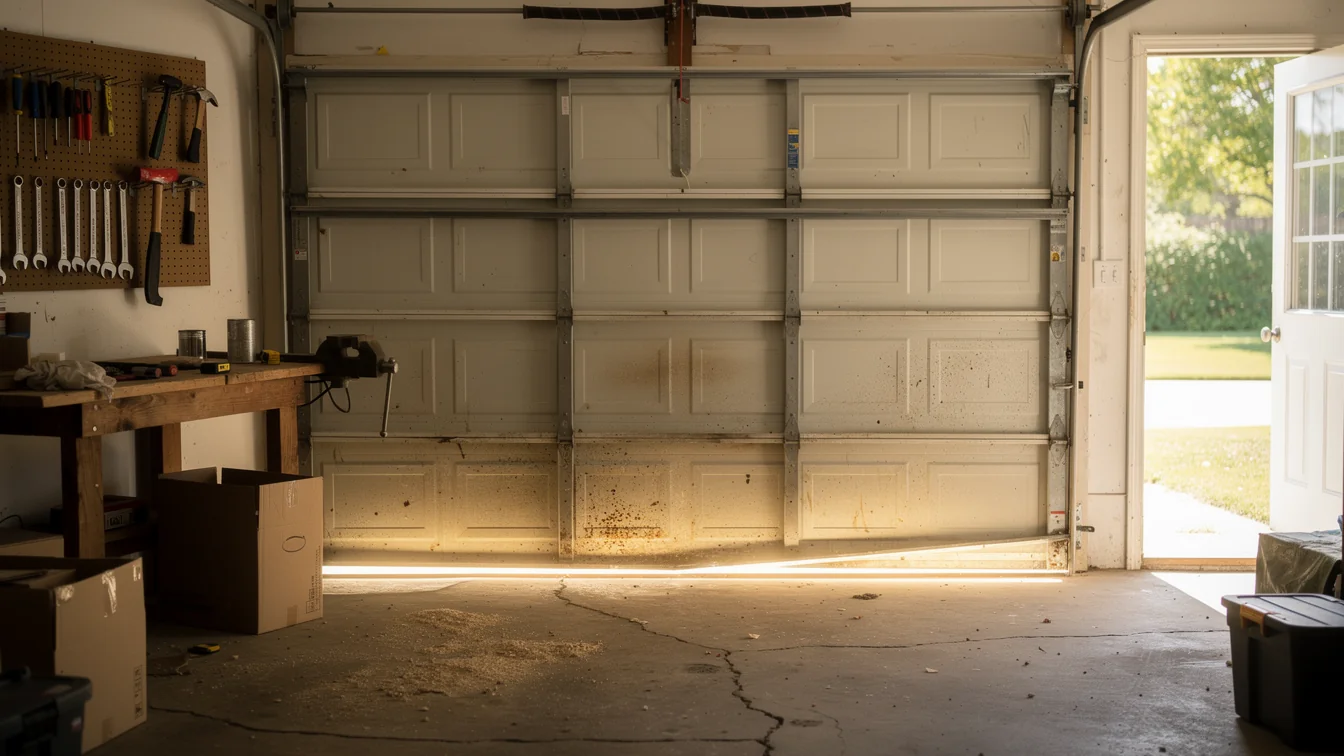
If your door still opens, closes, and seals reasonably well, you don't need to replace it just because it's old. A lot of the houses in this area were built between 1938 and 1997, with the median landing around 1975, and plenty of those original doors are still working fine decades later. What you're watching for isn't age itself - it's gaps at the bottom seal, a panel that's started to bow, or a door that feels noticeably colder to stand next to than it used to. None of those are emergencies on day one. A door with a failing seal will keep working for a while; it just lets more cold air sit in the garage, which matters if that garage shares a wall with living space. Waiting a season to budget for a fix is reasonable. Waiting through several Colorado winters while a seal keeps degrading usually costs you more in the long run, since once the bottom astragal cracks in cold weather it tends to go all at once rather than slowly. The honest answer is: nothing wrong with deferring a cosmetic issue, but don't defer a seal or spring problem on a door built before anyone was thinking about insulation values.
What Local Conditions Do
This stretch of the Front Range sits in a severe cold climate band, and that matters more for a 1960s or 1970s door than people expect. Doors built in that era, which make up most of the stock across the 26 named areas in this service territory, were framed and hung before insulation requirements existed in residential codes. That means single-layer steel or wood panels with no thermal break, and often no integrated weatherseal track at all - just a door, hung on hardware, doing its job as a barrier and nothing more. In a severe cold climate, that shows up as condensation on the inside face of the door, frost forming on hardware, and springs that get stiffer and more prone to snapping in sustained cold because the steel contracts. None of this is unique to one house - it's the pattern across houses of that build era here, from the closer-in areas like West Pleasant View and Applewood out to Genesee and Idledale. If your door predates insulation rules, cold isn't just uncomfortable, it's doing slow mechanical damage to seals and springs that a newer, insulated door wouldn't take the same way.
What It Costs
I'm not going to put a number on this one, because what drives the cost on a pre-insulation door isn't the door itself - it's what's behind it. A straight panel swap on original hardware is a different job than replacing hardware that's been fighting cold-weather contraction for fifty years. Springs sized for a non-insulated door often don't match what an insulated replacement needs, so the job can turn into new springs, new track, and new seals rather than just a door. The honest limitation here: I can't quote a figure without seeing what's actually on the house, because a 1975-built door and a 1995-built door in this same climate band can need completely different work even though they look similar from the driveway. What I can tell you is that replacing an old uninsulated door usually also means addressing the opener and seal system at the same time, since those parts were sized to the original door's weight and balance.
The Situation
Across this service area - roughly 61,414 households, with around 29,867 of those owner-occupied houses - a large share of the garage doors in daily use were installed before anyone wrote insulation standards into residential code. That's not a defect, it's just the era. Houses from West Pleasant View and Applewood a couple miles out, through Genesee and Idledale, to Evergreen and the areas further southwest, mostly fall into that 1960s-70s build window. The practical upshot is that a door inspection on a house from that period needs to look past rust and dents and check whether the panel itself has any insulation value at all, because in a severe cold climate that's the difference between a garage that's merely unheated and one that's actively working against the house next to it. Median household income here is above $108,000, which is relevant mainly in that most owners in this situation are choosing between a targeted hardware fix and a full insulated replacement rather than being forced into the cheapest option by necessity.
Frequently asked questions
Does my garage door need to be insulated if it was built before code required it?
Not legally - there's no code requirement to retrofit. But in this climate band, an uninsulated door built in the 1960s or 70s is doing real work against your heating bill if the garage shares a wall with living space, and the springs on those older doors tend to fail more in sustained cold.
How do I know if my door predates insulation rules?
Check the panel edge or look at the back of the door. A single layer of steel or wood with no visible foam core and no thermal break usually means it's from before insulated doors were standard, which lines up with most of the 1960s-70s housing stock in this area.
Is it worth replacing an old door just for insulation value?
Depends on what else is wrong. If the springs, track, and hardware are still sound, you can sometimes add a retrofit seal kit for less than a full replacement. If the hardware is also original and struggling with cold, a full replacement usually makes more sense than patching piece by piece.
Related garage door services in Golden
More garage door guides
Book garage door service in Golden
Call now or request a quote - tell us what the door is doing and where you are.