
Golden, CO · Garage Door Service
Why Golden Homes Need Weather Seals Before the Cold Hits
Golden homes built between 1938 and 1997 lose heat fast through worn garage door seals. See what the foothills cold does to old weather stripping and tracks.
- Repairs & new doors
- Springs & openers
- Serving 8 nearby communities
Doing Nothing For Now
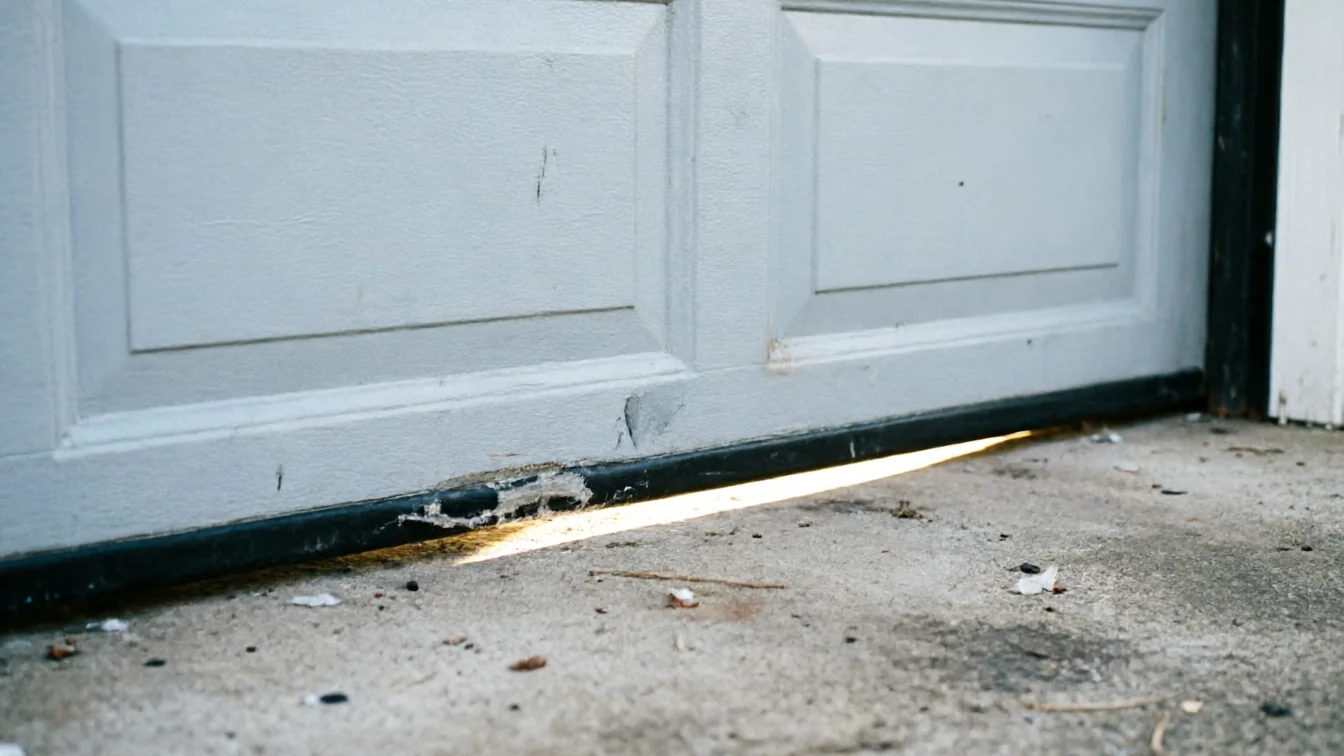
A lot of garage doors in Golden are still running the weather seal that came with the house, and most of this housing stock went up between 1938 and 1997, with the median build year sitting around 1975. That seal is rubber. Rubber that's been flexing through 45-plus winters in a severe cold climate band doesn't seal anymore - it cracks, it flattens, it pulls loose from the track. You can leave it. Nothing falls off the wall tomorrow. But every cold night that door sits with gaps at the bottom panel and side jambs, you're heating your garage for the outdoors, and whatever's stored against that wall - paint, tools, a second fridge - takes the temperature swing with it. Waiting isn't dangerous the way a snapped cable is dangerous. It's just slow money leaking out through a quarter-inch gap, winter after winter, until the door itself starts binding because the weatherstrip channel has swollen or split and the panel isn't tracking straight anymore. At that point you're not buying a seal kit, you're buying a service call for something that used to be a five-minute fix.
What Local Conditions Do
Golden sits where foothills cold band is rated severe, and that matters more for a garage door than most people think. It isn't just the low temperature - it's the swing. A door that sits at freezing overnight and gets hit with direct sun by mid-morning puts real stress on vinyl and rubber seals, and on the steel track holding the rollers. The seal hardens in the cold, then has to flex again when it warms, and each cycle it loses a little elasticity. On a house from the 1960s or 70s stock that's common through this area, the original hardware was never built with today's insulation standards in mind, so a worn seal on an older door does more damage than the same wear would on new construction. Drafts find their way in at the bottom astragal first, then the side seals, then the top. Left alone through enough freeze-thaw cycles, the wood jamb behind the seal can take on moisture and the whole frame starts to shift slightly, which is when a door that used to close flush starts leaving daylight at one corner.
What It Costs
I don't have a standard price list to hand you here, and I'd rather say that than make one up. What drives the cost on a job like this is mostly the door's age and what the seal track looks like once we're in front of it - a straightforward strip-and-replace on a door with intact channel is a different job than one where the jamb's warped from years of moisture getting past a cracked seal. Houses in this area built in the 1938-1997 range vary a lot in what hardware they're still running, so two doors three streets apart can need two different fixes. The honest answer is we quote it after we look at the door, not before. If the frame's sound and the track's straight, a seal job is usually quick. If the cold's been getting in long enough that the wood's moved, that's a bigger conversation, and it's worth having before you spend money on a seal that won't hold in a frame that's no longer square.
The Situation
Golden's service area covers a wide mix of terrain and housing, from places like West Pleasant View and Applewood just a couple miles out to Evergreen, Kittredge, and the areas up toward Genesee and Idledale sitting higher in the foothills. Across the roughly 61,414 households and 29,867 owner-occupied houses in this area, median household income runs around $108,729 - which tells you most owners here can afford to fix a seal problem properly rather than patch it, but a lot of them haven't gotten around to it because a drafty garage door doesn't feel urgent until a cold week makes it obvious. The age spread in the housing stock means some of these doors are original 1970s steel with factory weatherstrip nobody stocks anymore, and others have already been replaced once. Either way, the cold band this area sits in doesn't care how new your subdivision is - any seal left too long is going to let winter in.
Frequently asked questions
How do I know if my garage door seal actually needs replacing or if it's just drafty from age?
Run your hand along the bottom and side seals on a cold morning - if you feel air moving, or you can see daylight at the corners when the door's shut, the seal's done its job as long as it's going to. On houses in this area built mid-century, cracked or flattened rubber at the bottom astragal is the most common failure point.
Will a new seal fix a door that's hard to close in winter?
Sometimes. If the binding is from a swollen or cracked seal pushing the panel off-track, yes. If the jamb itself has shifted from moisture getting in over multiple winters, a new seal alone won't fix it - we'd need to look at the frame first.
Does Golden's cold actually wear out seals faster than a milder climate would?
Yes - the repeated freeze and thaw cycling here is harder on rubber and vinyl weatherstrip than steady cold would be. Each swing from overnight freeze to daytime sun flexes the material, and on older doors common to this area's 1970s-era stock, that adds up faster than people expect.
Is it worth replacing the whole door instead of just the seal?
Depends on the door's age and what shape the panels and track are in. If the seal's the only problem, replacing just that is the cheaper and faster fix. If the door's original to a house from the 1938-1997 era and the panels are also dented, rusted, or warped, that's a different conversation worth having in person.
Related garage door services in Golden
More garage door guides
Book garage door service in Golden
Call now or request a quote - tell us what the door is doing and where you are.