
Golden, CO · Garage Door Service
What an Older Door Is Worth Fixing in Golden
Golden homes run mostly 1960s-70s builds with original hardware. Here's how to tell if your door's worth repairing or if cold-weather wear means it's time to replace.
- Repairs & new doors
- Springs & openers
- Serving 8 nearby communities
Doing Nothing For Now
If your door opens, closes, and seals most of the way, you don't need to act today. A lot of houses in this service area went up between 1938 and 1997, with the median landing around 1975 - so plenty of doors out there are original or close to it, and plenty of those are still doing their job. Waiting is a reasonable call if the track isn't bent, the spring isn't visibly stretched or gapped, and the opener still reverses on contact.
What changes the math is winter. A door that's merely stiff in August can bind hard once temps drop, because cold steel contracts, old grease gums up, and a torsion spring that's already lost tension has less margin to work with. If your door is from that 1960s-70s wave that makes up most of the stock across the 26 named areas we cover, it's worth a five-minute look before the season turns rather than after it's already stuck halfway up. Doing nothing is fine right up until the point where doing nothing means a dead opener motor at 6 AM in January.
What Local Conditions Do
This area sits in a cold, severe climate band, and that matters more for a garage door than most homeowners expect. Steel panels contract in low temperatures, which tightens tolerances at the track and can turn a slightly misaligned roller into a door that won't travel smoothly. Torsion springs lose a bit of lift capacity in deep cold, so a spring that's already marginal from age gets pushed closer to failure right when you need the door most - getting a car out before a storm, not after one.
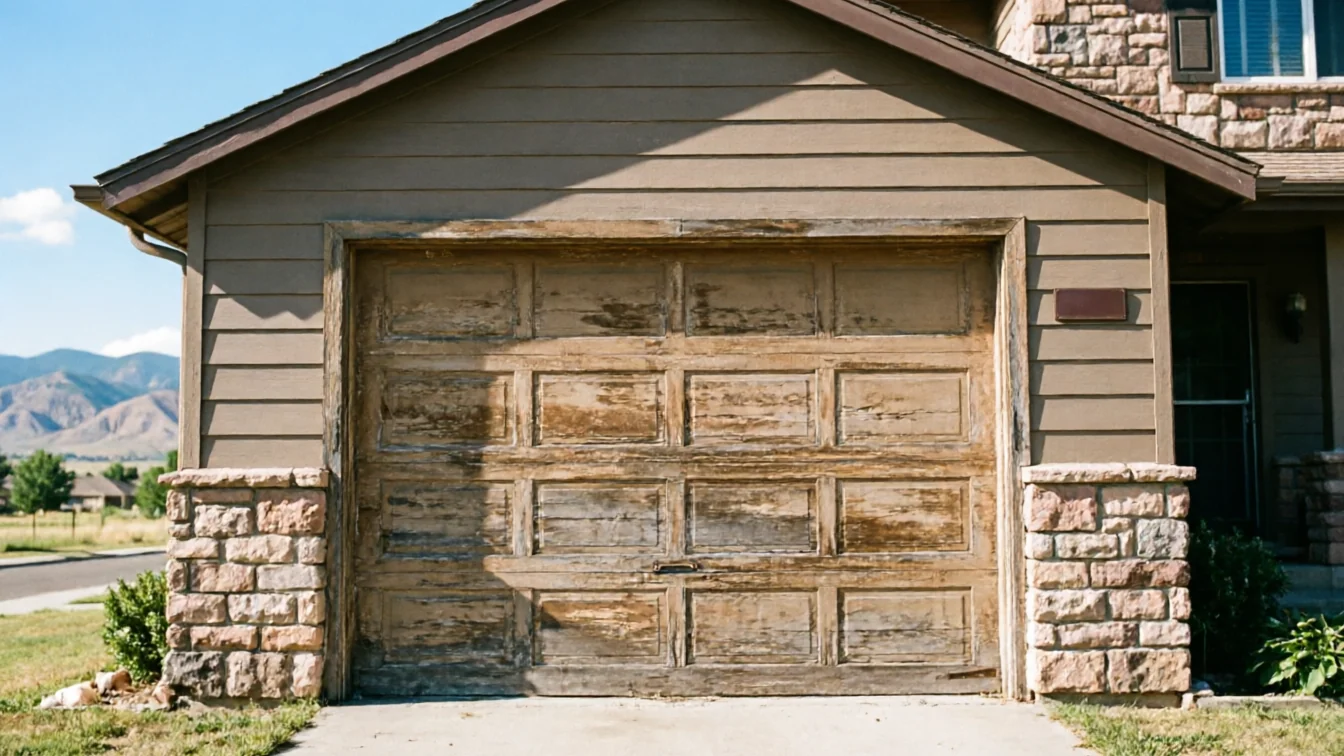
Because median construction here lands around 1975, a large share of doors in this service area are old enough that their hardware predates a lot of the weatherstripping and insulation standards used today. That's not a flaw, it's just the era. A door built then can still be structurally sound, but the bottom seal, the astragal, and sometimes the section insulation are the first things to give up in severe cold, long before the panel itself fails. Fixing those parts on an otherwise solid door is usually worth it. Fixing them on a door whose panels are already racked or rusted through is throwing good labor at a door that's done.
What It Costs
I'm not going to put a number here that I can't back up without seeing the door, so I won't guess. What I can tell you is how to think about it. In a service area where median household income runs $108,729, most owners aren't looking to sink money into cosmetics - they want the door to work reliably through winter and they want to know if a repair is the last repair or just the first of several.
That's the real question for an older door: is this a single worn part on an otherwise sound frame, or is this a door where the springs, rollers, and opener are all near end of life at once? One repair on a door that's otherwise square and sealing well is almost always worth doing. Three separate repairs spread over a year on the same door usually means you're paying installment-plan pricing for a door you were going to replace anyway. We'll tell you straight which one you're looking at - we don't pad a repair ticket to avoid saying 'replace it.'
The Situation
Golden sits close to a cluster of older residential pockets - Applewood and West Pleasant View are each about 2 miles out, Golden Gate Canyon is 3 miles northwest, Mount Vernon 4 miles west-southwest - and across that stretch, and out toward Genesee and Idledale at 5 miles, the housing stock skews the same way: built mostly in that 1960s-70s window, original garages, original hardware in a lot of cases.
Across the wider service area - 61,414 households, with 29,867 of those in owner-occupied houses - that means a large base of doors that are 50 to 60 years old and were built for a different set of weatherstripping and spring-tension standards than what ships today. That's not a reason to panic about your door. It's a reason to actually look at it instead of assuming either 'it's fine' or 'it's junk.' An old door with sound panels and a bad spring is a repair. An old door with bowed panels, rusted track, and a spring that's already let go is a door you replace once, correctly, instead of patching three more times.
Frequently asked questions
My garage door is original to the house. Is that automatically a replace?
No. Age alone doesn't condemn a door. If the panels are square, the track isn't bent, and the only problem is a worn spring or roller, that's a straightforward repair. What pushes it toward replacement is rust-through, racked panels, or an opener and springs all failing around the same time - then you're better off doing it once.
Why does my door act up more in winter than summer?
Cold steel contracts and tightens tolerances at the track, and an aging torsion spring loses some of its lift capacity in low temperatures. A door that's merely stiff in warm weather can bind or refuse to travel smoothly once the cold sets in, which is why problems tend to show up hardest in winter.
Should I replace the whole door or just fix the broken part?
Depends on what else is wearing out. One worn part on an otherwise sound door is worth fixing. If you're looking at a second or third repair on the same door within a year, you're likely paying for parts on a door that's near the end of its service life anyway - we'll tell you which situation you're in before we write the ticket.
Can you give me a price over the phone for an older door repair?
Not honestly, no. Repair cost depends on what's actually worn - spring, rollers, track, seal, or some combination - and we won't quote a number before we've looked at the door. We can tell you what to expect once we've seen it.
Related garage door services in Golden
More garage door guides
Book garage door service in Golden
Call now or request a quote - tell us what the door is doing and where you are.